DISINTEGRATION
BACK INTO THE VOID
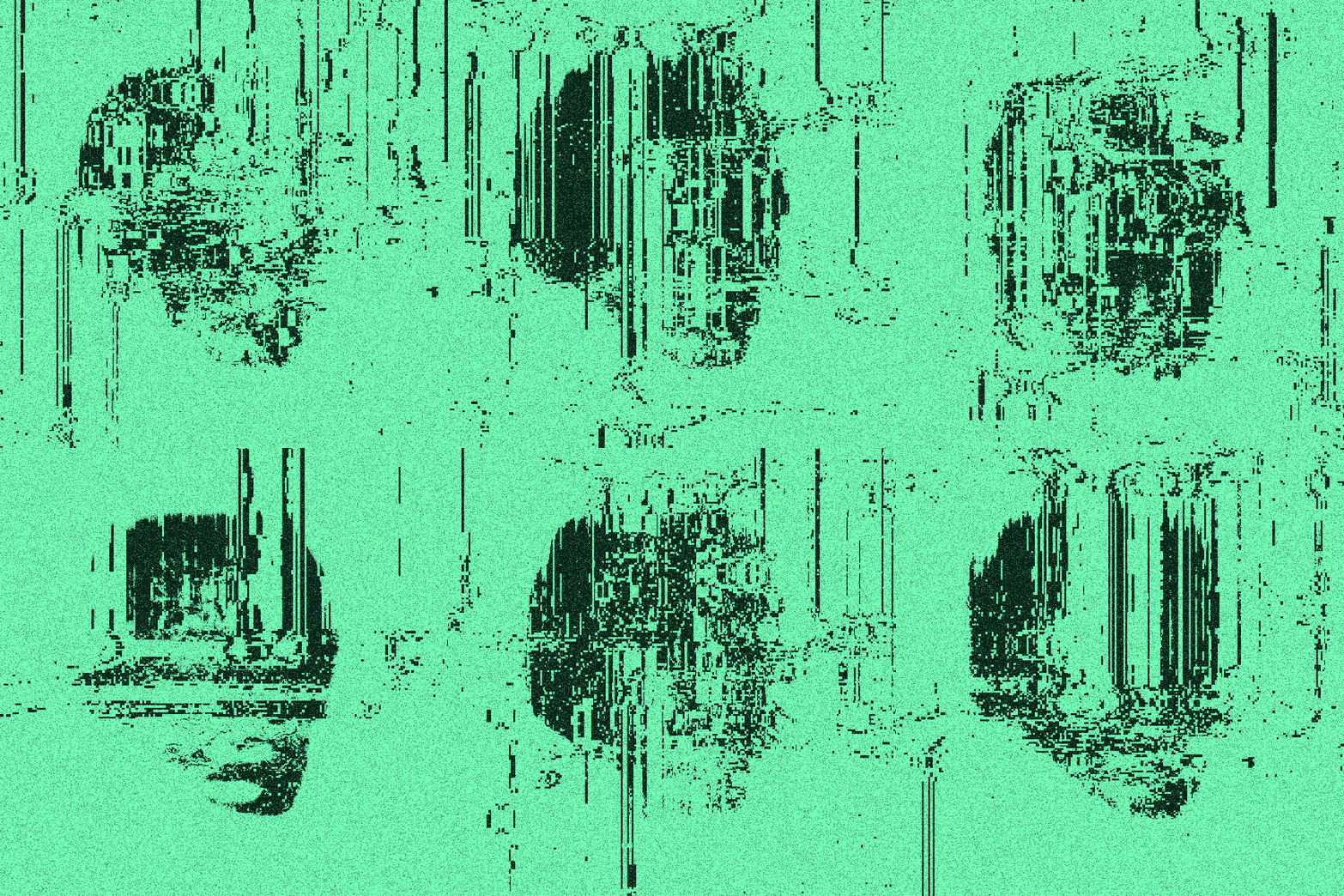
Disintegration is the second of 19 edition works XCOPY sold on the KnownOrigin contract. It was minted on November 17, 2018 and took 389 days to sell out 50 editions, with two gifted. The average sale price was 0.08 ETH (around $25USD at the time).
The work itself is a square 1000 x 1000 pixel GIF of 16 frames (2MB) stored on IPFS. Notable initial owners included Alotta Money, Whaleshark, Mattia Cuttini and Robness.1
Though abstracted, the subject is clearly a skull in the memento mori tradition, and we see a single colour green background, perhaps a reference to all the digital green of early cathode ray computing.
Like The Doomed, XCOPY had been iterating on this work on his Tumblr, with the first version appearing in December 2011.2
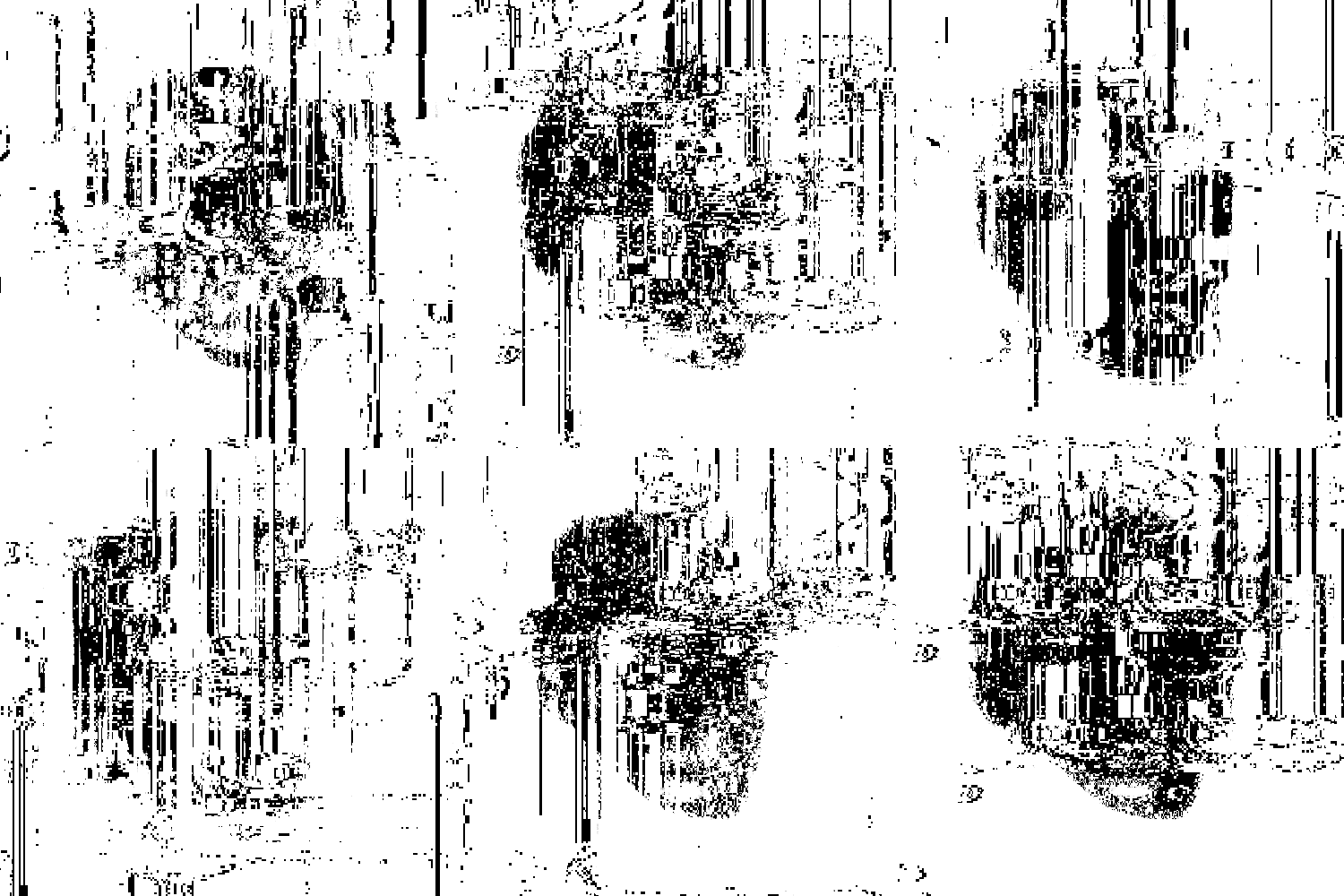
It is noteworthy that this is not the same image as that finally released on KnownOrigin, this early work consisting of 19 frames, some of which differ. The cadence of the image loop in the final work is much quicker, and more urgent.
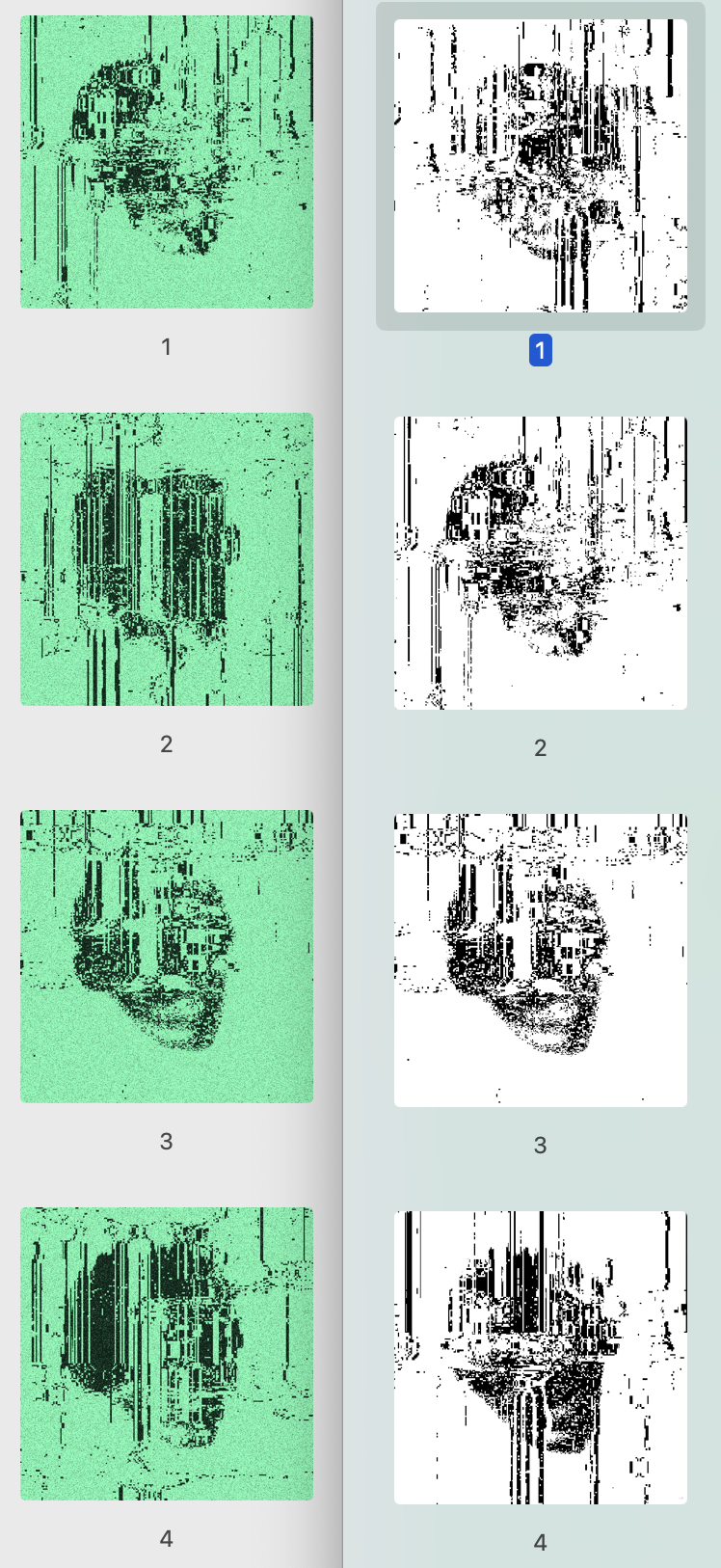
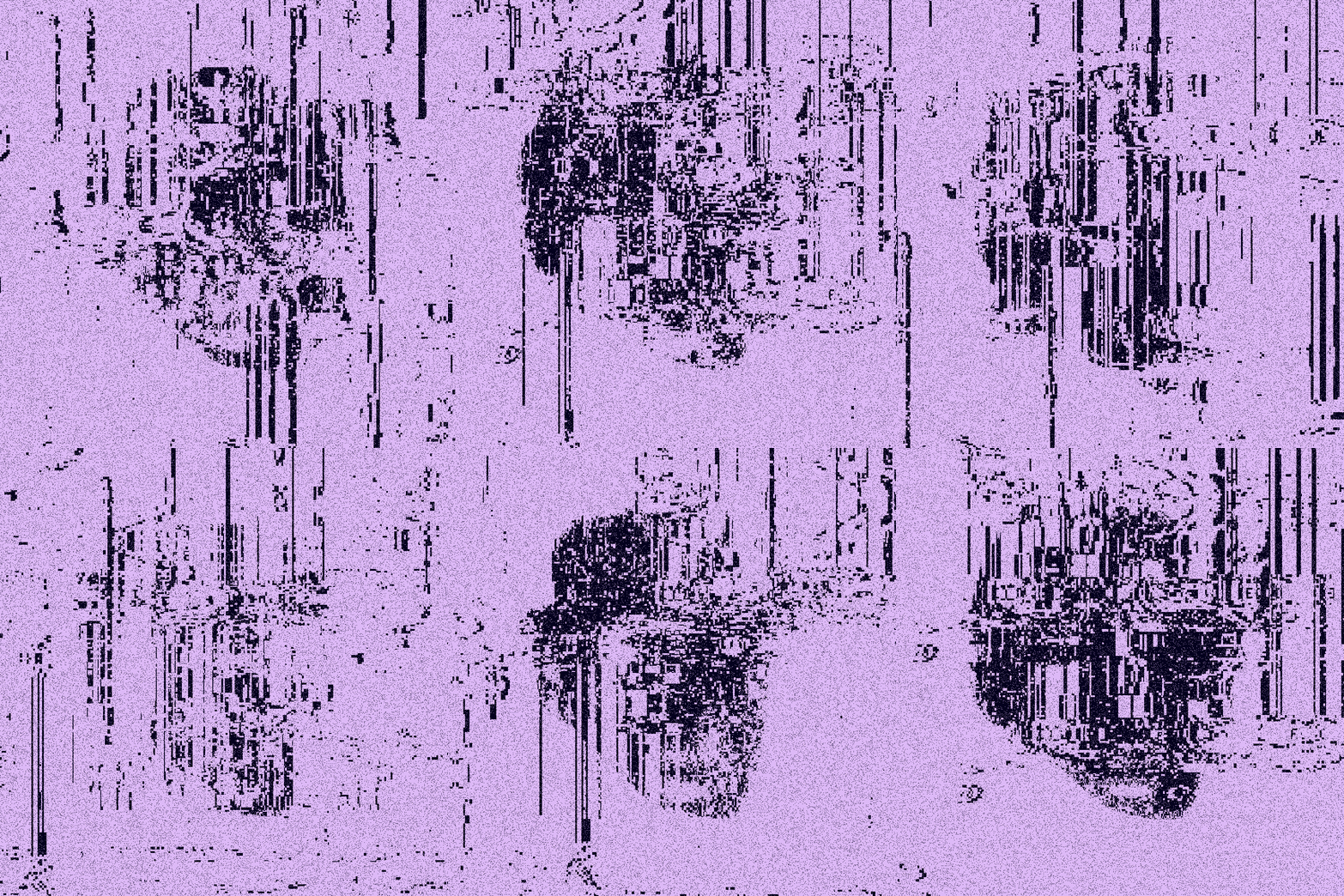
As in the final image of ‘The Doomed’, zooming in on detail reveals more than the addition of the green background, but a finer grained pattern that seems to move from right to left in the upper image and left to right in the lower image.
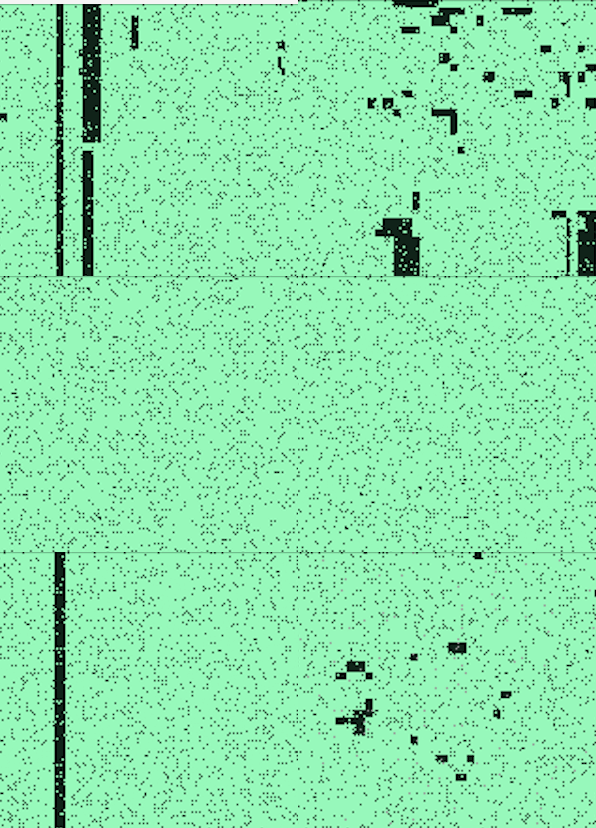
This control in the final animated work is a feature seen in detail through the progression of XCOPY work on Tumblr, (representing an unprecedented documentation of the stylistic evolution of a major artist, a literal build in public).
Slowing down the animation and examining this effect is helpful:
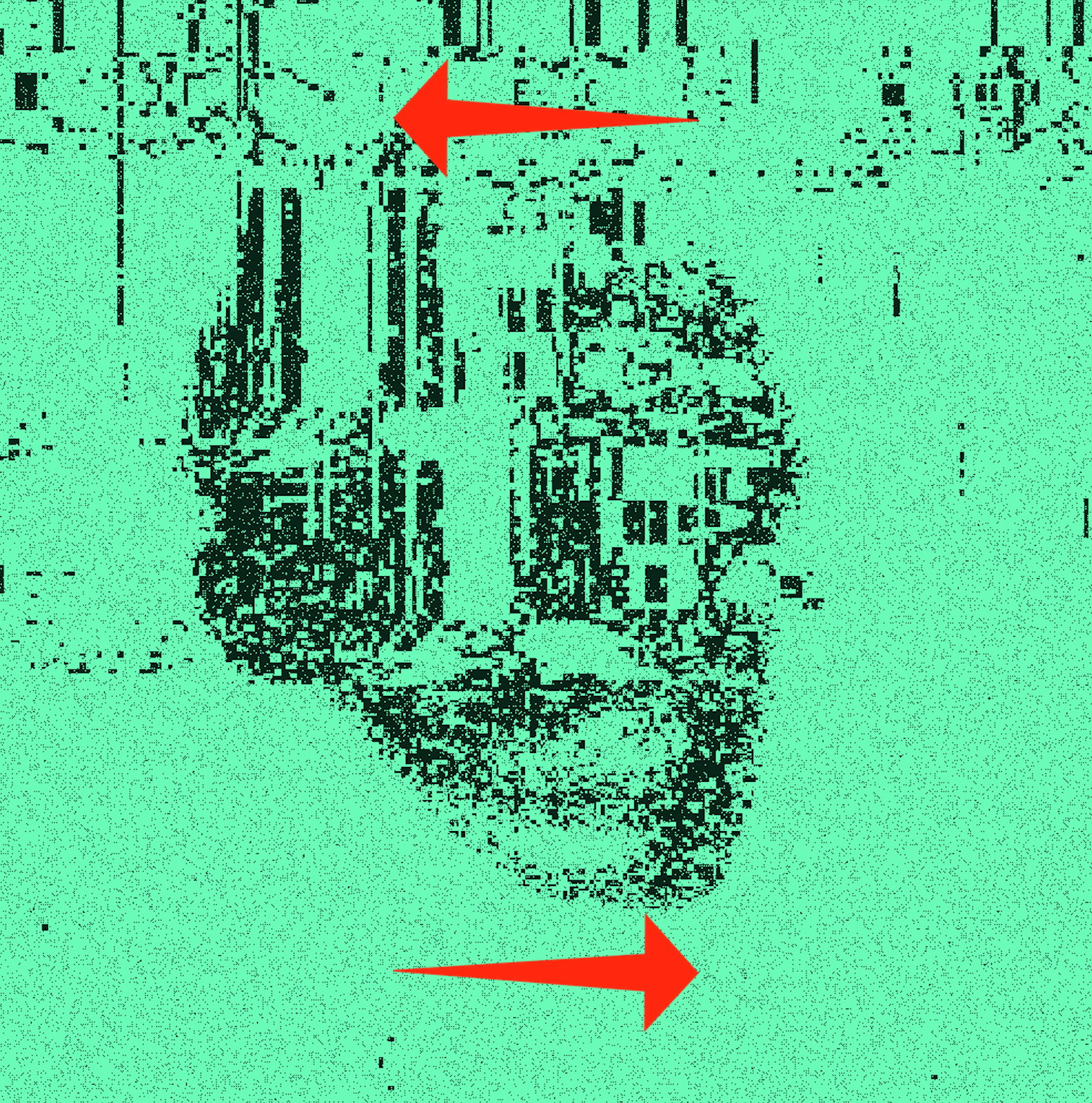
Great art is often about control: things that are not added and those that are deleted. Amongst a torrent of digital images there is a degree of refinement in XCOPY work and in this case, a precise cadence to the images which move in an anticlockwise ‘down the drain effect’. A disintegration of form.
It is likely the source image is a photo or photos which are then heavily manipulated. There are works from around that time that are less abstracted, and where this workflow can be more easily parsed. Again the Tumblr archive is helpful here, as the anxiety of influence becomes so wonderfully sublimated over time.3
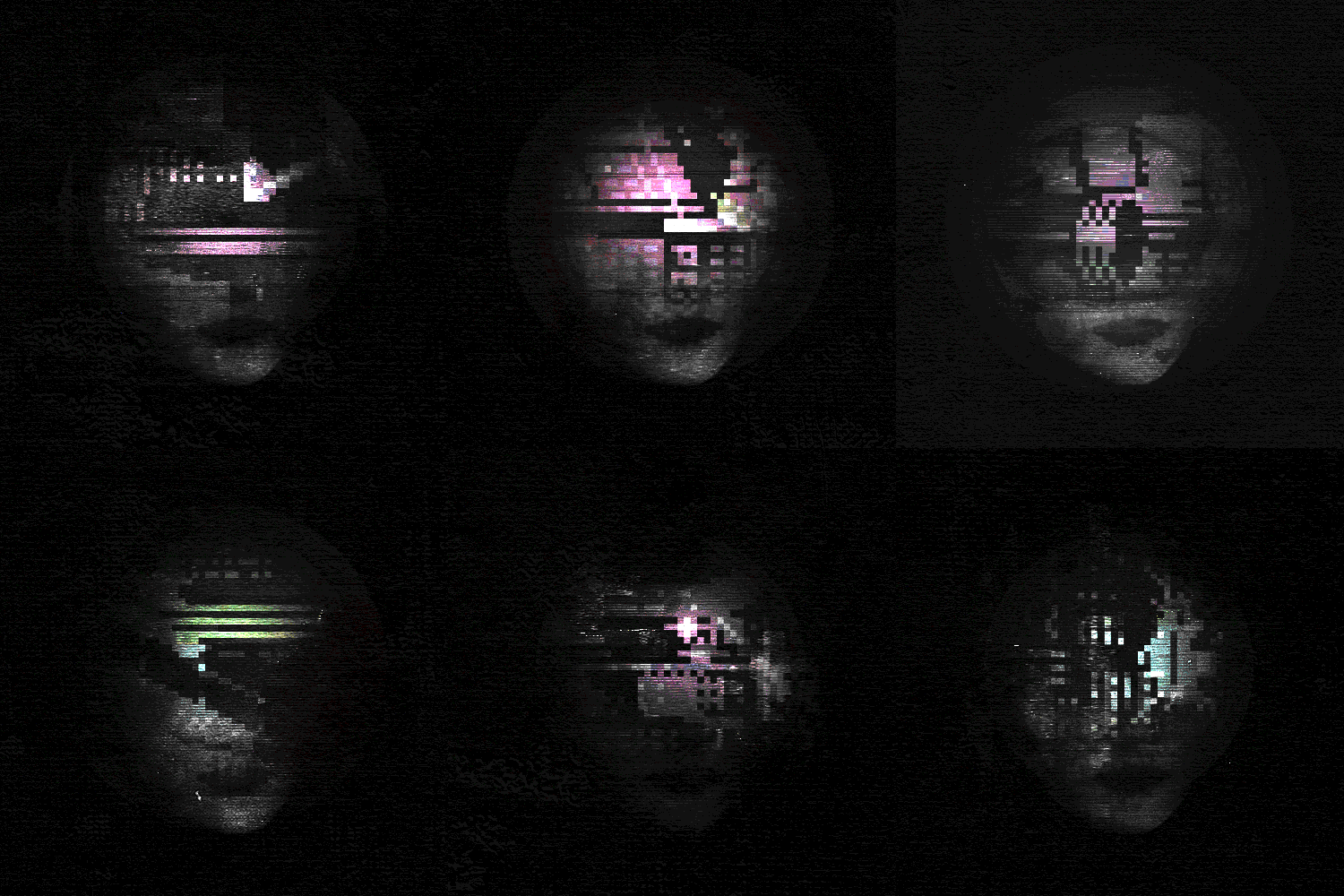
Versions of Disintegration would be posted on Tumblr in April, and May 2013 (white), August 2014 (this time with a mauve background), September 2016 (mauve) and September 2017 (mauve), June 2018 (purple), August 2018 (purple), October 2018 (purple).4
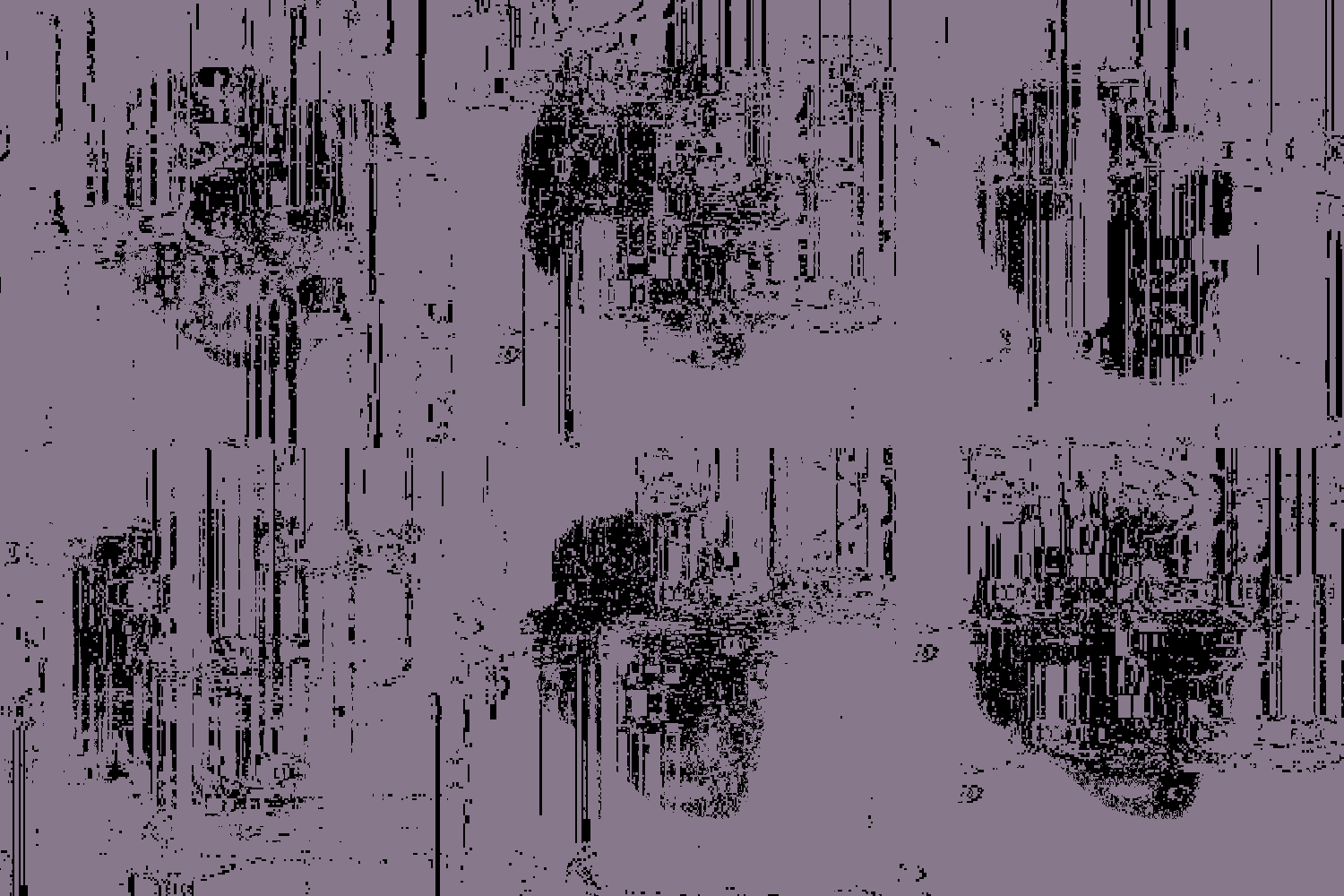
This purple version was named ‘Dissolution’ and minted as a 1/1 on SuperRare in May 2018. It did not sell until November 2018, when it was bought for 1 ETH ($130 USD). It was later sold to Anonymoux in May 2021 for 100 ETH ($412,000 USD). Here we see more detailed grain added to the background image.5
The final green image was posted on Tumblr twice in October 2018 then minted as an edition on KnownOrigin in November 2018.6
Is Disintegration a skull or a portrait figure? In this XCOPY work it is not clear. When we examine the frames individually things become even less certain. This Goyaesque ambiguity we see here is key. This question of interpretation is the engine of durably important art.
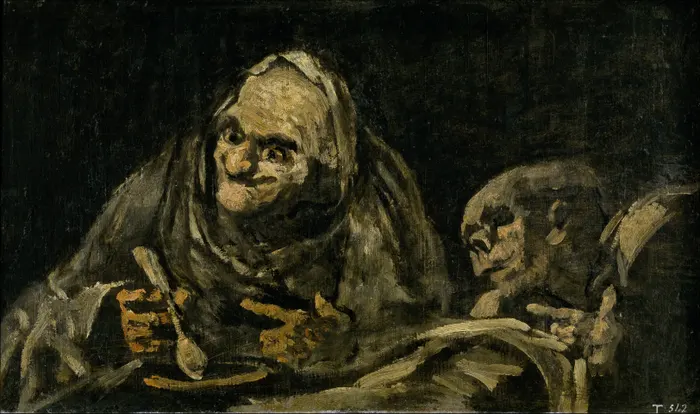
The most obvious read then of ‘Disintegration’ is literal. The skull is death, and we die, and re-enter the void.
There is a more detailed interpretation though, in which technology has a central role.
Technological development has arguably been the driver of art and culture, not the other way around. The humanist project, started by Luther and finalised by Warhol, has been followed by a stagnant period loosely called postmodernism, but really a 50 year pause waiting for the next innovation.
That innovation matures precisely as XCOPY is working on Tumblr (2010-2020) and the innovation is coalescence of the digital: personal computing, the internet and blockchain.
An alternate view of ‘Disintegration’ then is not as a memento mori, but as an entry point to the Cambrian explosion of post-post modern humanism: an exponential age of digital innovation, its possibilities and dangers.
The Nietzchean Overman made extant, god of the open metaverse.