LAST SELFIE
WAS IT WORTH IT?
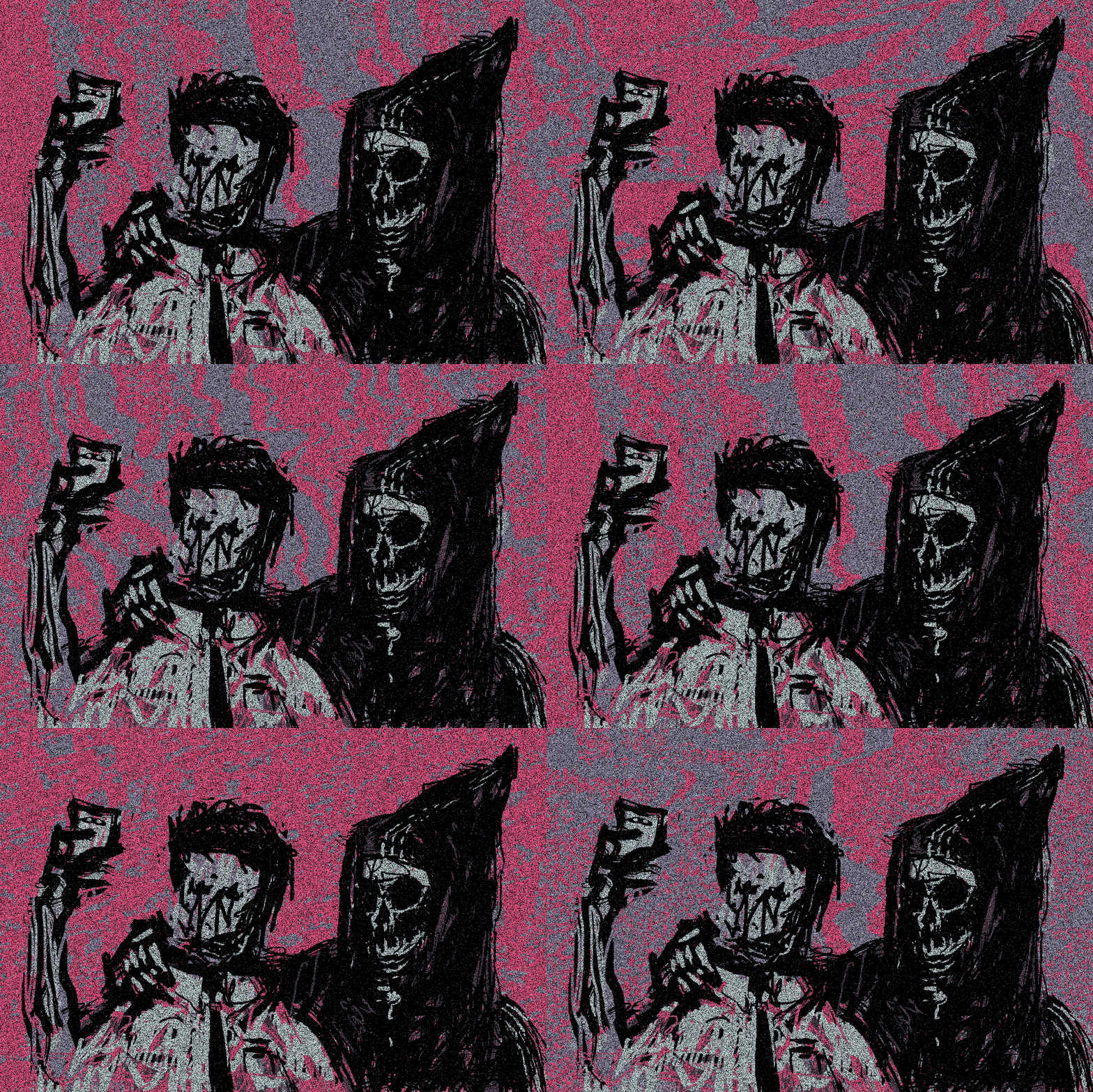
In the pantheon of XCOPY’s KnownOrigin editions, few images capture the nihilistic verve of the digital age as effectively as Last Selfie (2018). Issued on KnownOrigin as an edition of ten, with its first token minted on 17 January 2019, this animated work serves as a defining artefact of the crypto-native aesthetic, encapsulating the artist's preoccupation with death, dystopia, and the absurdity of modern digital existence. Through glitch-heavy visual language and thematic irony, Last Selfie updates the classical memento mori for an era defined by surveillance capitalism and performative identity.1
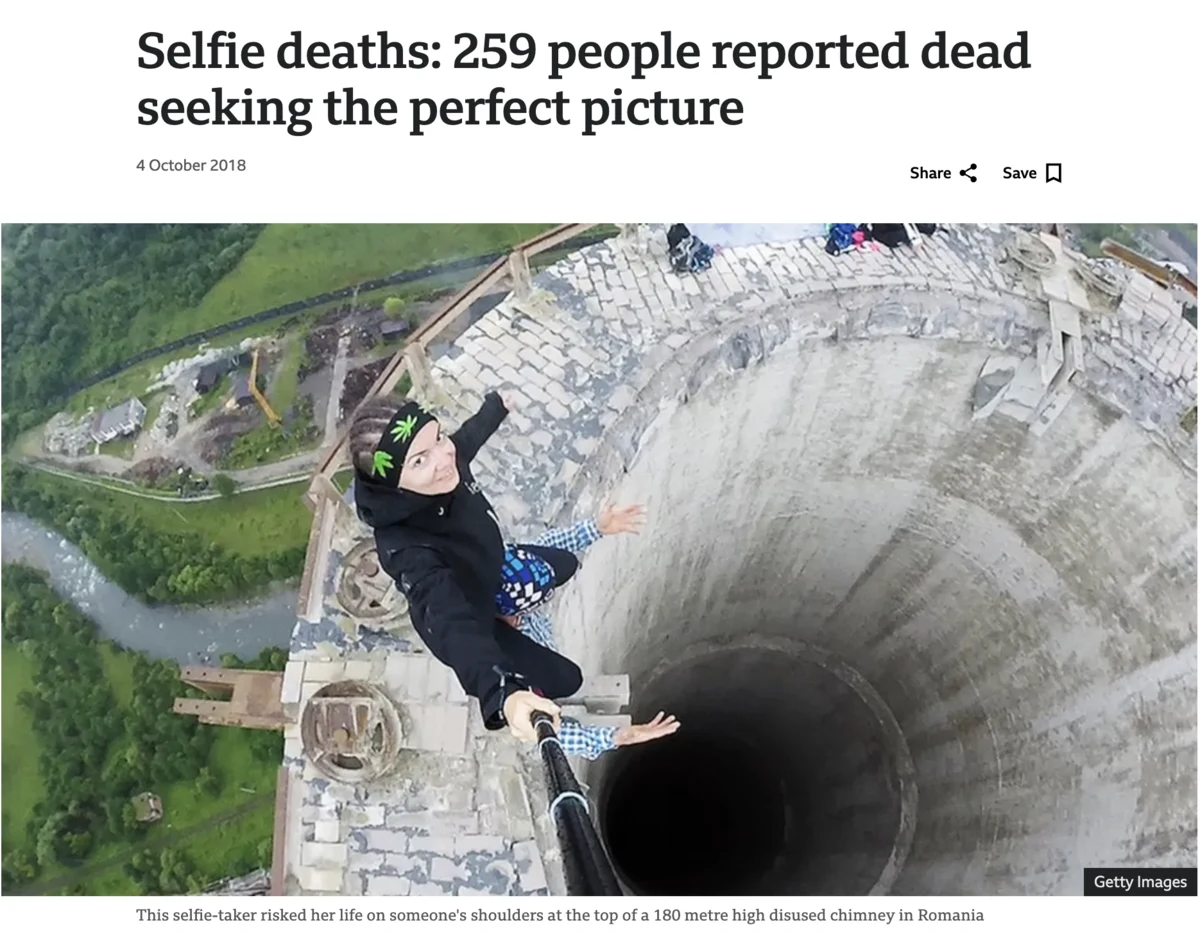
The accompanying photograph, reproduced by BBC Newsbeat, shows a selfie-taker on a disused chimney in Romania. Photograph: Getty Images.2
The artwork presents a visceral scene of a figure taking a photograph of themselves while being embraced by a skeletal, reaper-like entity. The work is rendered in XCOPY’s signature style: a throbby, rough-edged animation where the image seems to be in a constant state of corruption and disintegration. The background is a static-heavy field of pink and grey noise, creating a sense of visual violence that suggests the digital environment itself is hostile or decaying.
Thematically, the piece interrogates the defining image-form of the 21st century: the selfie. By situating this act of self-documentation at the precise moment of annihilation, XCOPY poses a fundamental question regarding what image we leave behind when there are no more images to take. The figure in the work does not degrade gracefully; rather, it fractures and tears apart, mirroring the instability of identity in a hyper-connected world. The act of taking the selfie becomes inseparable from the act of self-destruction, suggesting that our obsession with recording our existence may be replacing the experience of existence itself. The work’s byline, "Was it worth it?", serves as a cynical epitaph for a culture obsessed with the commodification of the self.
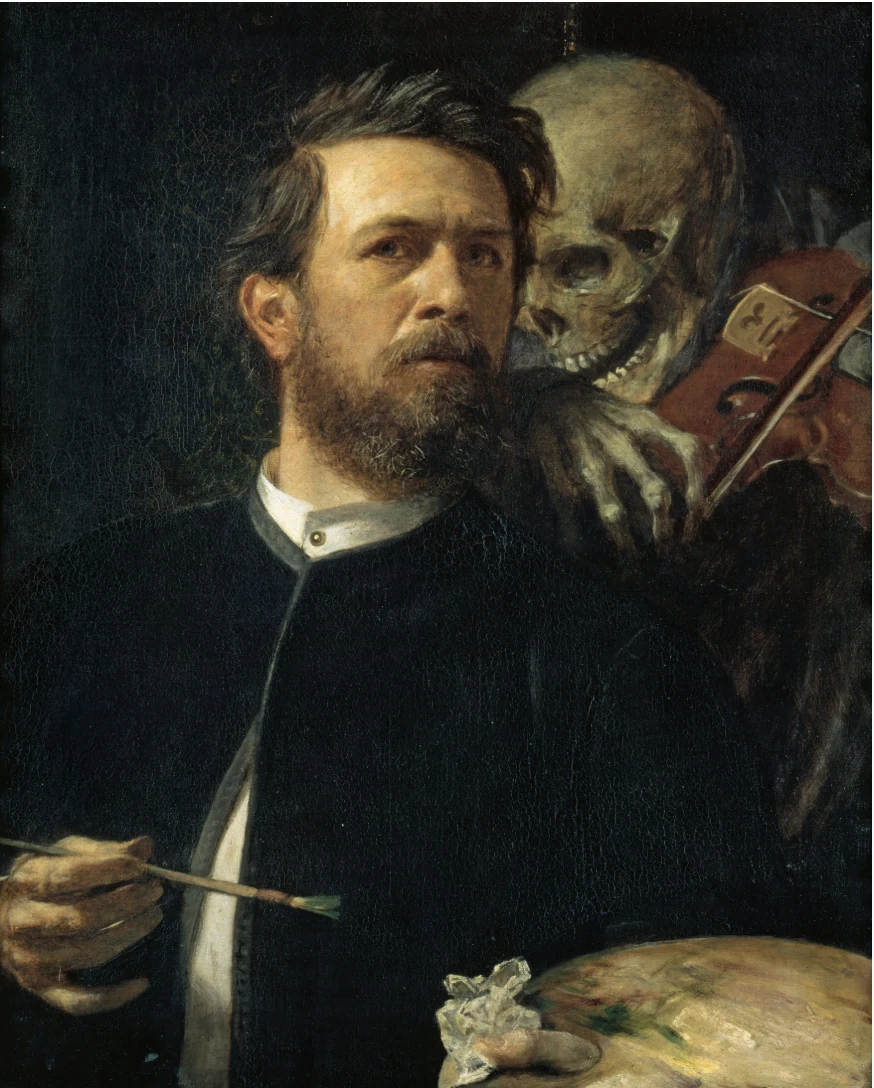
Last Selfie can be read within a long lineage of Western art. The juxtaposition of the living subject with a skeletal figure of death draws direct parallels to Arnold Böcklin’s Self-Portrait with Death Playing the Fiddle (1872). Just as Böcklin paused to listen to the song of mortality, XCOPY’s subject pauses to capture it for the feed.3
This connection serves as a digital memento mori (remember you must die), a reminder of mortality that medieval painters often symbolised through skulls or hourglasses. However, XCOPY strips the motif of its religious or redemptive qualities. In his interpretation, the grim reaper is not a spiritual guide but a final companion in the rat race, highlighting the absurdity of clinging to ego and status in the face of inevitable non-existence. The rough, stencil-like aesthetic and the prominence of the skull also evoke the raw, expressive approach of Jean-Michel Basquiat.
The Paradox of Permanence
A central tension in Last Selfie lies in the medium of its existence. The artwork depicts a fleeting, ephemeral moment of destruction, yet it is minted on a blockchain, theoretically granting it a form of immortality. As long as the Ethereum network persists, this last moment will loop eternally, unchanged and uncorrupted, creating a stark contrast between the decaying subject matter and the immutable ledger that hosts it.
This paradox reinforces the artist's broader commentary on the digital condition. While the human body and its digital avatars are finite and fragile, the data trails we leave behind, represented by the blockchain record, may outlast civilisation itself. The work suggests that we are exchanging our biological lives for a digital persistence, paying the ferryman not with a coin, but with our data.
Market History and Cultural Significance
Last Selfie also serves as a case study in the changing valuation of crypto art. The first KnownOrigin token was minted and purchased for 0.16 ETH on 17 January 2019.4 In October 2025, ARTnews reported the sale of edition 9/10 for 727 ETH, approximately $3.27 million.5
Eduardo Lima discusses buying Last Selfie in the video reproduced above.6
The work’s trajectory from early internet circulation and low-priced KnownOrigin sales to a seven-figure asset reflects the broader legitimisation of the glitch aesthetic. It validates the behaviour of early collectors who engaged with the work for its artistic merit before the market boom. Ultimately, Last Selfie stands as a cynical yet profound monument to the digital age.
XCOPY posted the yellow animation below as “Death #Selfie” on 19 May 2018.7