Marketplaces, contracts and provenance
The digital wild west: early marketplaces and lost works
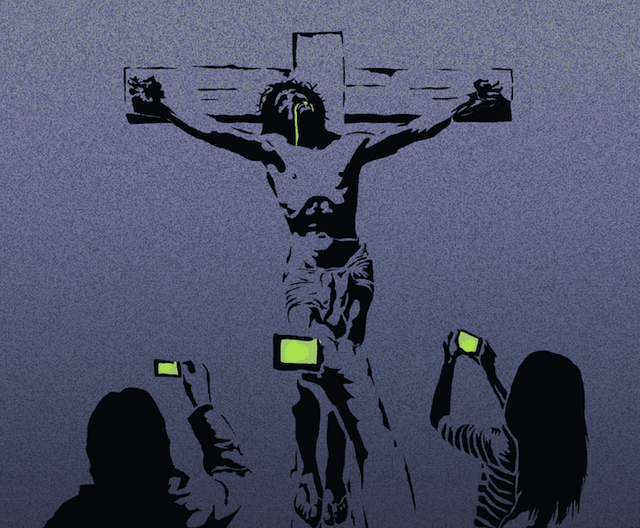
To understand the significance of XCOPY's editions on KnownOrigin, you first have to understand the fragility of the ecosystem that preceded them. His journey did not begin with stable infrastructure. It began in a period of experimental volatility. Before his rise to blue-chip status, XCOPY minted on early, now-defunct platforms such as Ascribe, Rare Art Labs and Digital Objects.
Ascribe was one of the earliest, and it was built on the Bitcoin blockchain. XCOPY minted there in 2018, with works like Jesus Mob and The Departed, which he has confirmed as his first one-of-one minted to a blockchain. His first Ascribe editions were priced at a pound and rose by a pound each. Transacting art on Bitcoin was awkward, however, and Ascribe struggled with scaling and interoperability before it shut down. This produced a phenomenon unique to digital art: the lost work. When these early marketplaces failed, the metadata often disappeared with them, because the images were hosted on centralised company servers rather than on a decentralised file system.
These failures were a crucible. They drilled into XCOPY the crypto maxim, not your keys, not your crypto, and they made the case for the era that followed. His move to Ethereum-based platforms like KnownOrigin meant the survival of the artwork was no longer tethered to the survival of one company's server.
The KnownOrigin contracts
XCOPY's editions were minted through KnownOrigin's own smart contracts, the KnownOriginDigitalAsset family, known as KODA. How those contracts are built explains both what the editions are and why they are so hard to move.
KODA is ERC-721 at its base, but it was written for editions rather than single tokens. The contract describes itself as supporting both unique tokens and multi-editions that share common traits in limited supply. When an artist creates an edition, the contract stores it as a single record with its own edition number, holding the run size, the metadata, the price and the artist's commission, and the individual tokens are minted in a batch under that number. Each piece in a run of twenty-five is therefore its own distinct ERC-721 token, individually owned and traded, while all twenty-five belong to the same edition. ERC-721 is what gives each piece its verifiable scarcity, the property that separates a minted edition from the right-click-save replicability of the web 2.0 era.
A few features of these contracts are worth drawing out. The first is lazy minting. On the KODA V2 contract, the tokens in an edition do not exist until they are bought or traded. The artist defines the edition, but each token is materialised only at the point of sale, which is why unsold KnownOrigin tokens historically did not appear on third-party aggregators until someone created them. Until a token sells, its ownership slot is empty and the contract treats the creator as the owner by default.
The second is where the artwork actually lives. The KODA contracts are non-custodial: KnownOrigin owns the contract but never the tokens, so an unsold token belongs to the creator and a sold one to the collector. The token record sits on Ethereum, but the image and metadata it points to were addressed off-chain, on IPFS. The token is permanent; the file it references persists only for as long as that IPFS content keeps being pinned. This is the blockchain air gap in concrete form, and it is why the survival of these works depends on the content being maintained, not on the token alone.
The third is that the design makes editions hard to leave. To move a KnownOrigin work onto a different contract, every token in its edition must be burned first, and where collectors hold those tokens, each collector has to burn their own. A twenty-five piece edition scattered across twenty-five wallets cannot migrate unless all twenty-five owners agree to destroy what they hold. An XCOPY edition is, in effect, bound to the KODA contract it was born in.
The contracts enforced the economics too. Artist commission on primary and secondary sales was written in and applied automatically, a model KnownOrigin later formalised around the EIP-2981 royalty standard. That enforcement held on KnownOrigin's own marketplace; on third-party marketplaces, whether the royalty is honoured depends on the marketplace rather than the contract. The Doomed, minted on 21 October 2018, is both an early XCOPY work and an early instance of this entire structure.
Smart contracts: the artist's royalty
The engine of XCOPY's economic autonomy was the smart contract, a self-executing agreement with its terms written directly into code. For XCOPY the contract was not only a way to transact. It was a way to enforce resale royalties.
In the traditional art market, artists rarely benefit when their work appreciates on the secondary market. Smart contracts on platforms like KnownOrigin changed that. Every time an XCOPY edition changed hands, a percentage of the sale, typically ten percent, was redirected automatically to his wallet. This altered the artist's relationship to the market. It turned collectors into partners and let his cult following grow into a global collector base without eroding his stake in the work.
Where the image lives: on-chain versus IPFS
A token is only half of an artwork. The token records ownership, but the image has to live somewhere, and where it lives decides how long it lasts. There are three broad options on a spectrum of durability.
The first is a centralised server. This is what the early platforms used, and it is why their work was lost. When the company dies, the file dies with it. The second is IPFS, the InterPlanetary File System, where a file is addressed by the hash of its contents rather than by a location, and can be served by anyone holding a copy. IPFS is decentralised, but it is not automatic. A file has to be pinned, actively kept online, or it can drop away. The third and most durable option is fully on-chain storage, where the image data or the code that generates it is written into the smart contract itself, so the work survives for exactly as long as the blockchain does.
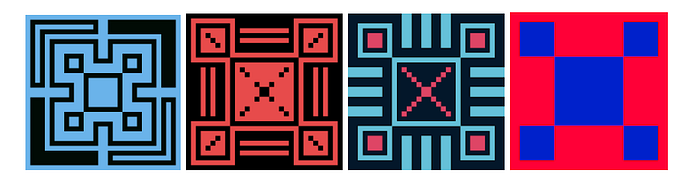
XCOPY is acutely aware of the gap between the token and the file, the vulnerability where the token lives on the chain but the image sits on a server. His answer has been to close it. His first fully on-chain work was a 2020 series of sixteen pieces on PixelChain, an application for making thirty-two by thirty-two pixel art stored entirely on-chain. His later work pushes the same principle much further, into contract-embedded vector art and on-chain generative code, discussed in the chapter on preservation. The direction of travel is consistent: less of the work on anyone's server, more of it on the chain.
Minting contracts: SuperRare, KnownOrigin and Manifold
Which contract a work is minted through matters as much as which standard it uses, because the contract decides who ultimately controls the token.
SuperRare and KnownOrigin are curated marketplaces, and historically an artist minting on them minted into the platform's own shared contract. The token belonged to the artist, but it lived inside infrastructure the platform controlled, assigned an identifier in sequence and displayed among unrelated work by other artists. XCOPY was the second artist ever to mint on SuperRare. His first twelve pieces there are known to collectors as the X12, beginning with Echoes of a Dead Earth on 7 April 2018, the fifth token minted on the platform. On KnownOrigin the same shared-contract model housed his 28 editions.
Manifold represents the next step, and a change in who holds the keys. A Manifold artist deploys and owns their own smart contract rather than renting space in a marketplace's contract, so token identifiers, provenance and control stay with the creator. The contract can be built on either token standard, and the choice maps to the work: ERC-721 for one-of-ones, where each token is unique, and ERC-1155 for large open editions, where a single contract can batch-mint thousands of identical copies at far lower cost. XCOPY used Manifold both ways, for open editions like Max Pain, which lean on the 1155 model, and for Fresh Hell, whose works are stored fully on-chain. The same contract can also carry burn-to-redeem mechanics and on-chain royalties. The arc across these platforms is a move from renting space in a platform's contract to owning the contract outright, and with it the infrastructure the work depends on.
Provenance versus link rot
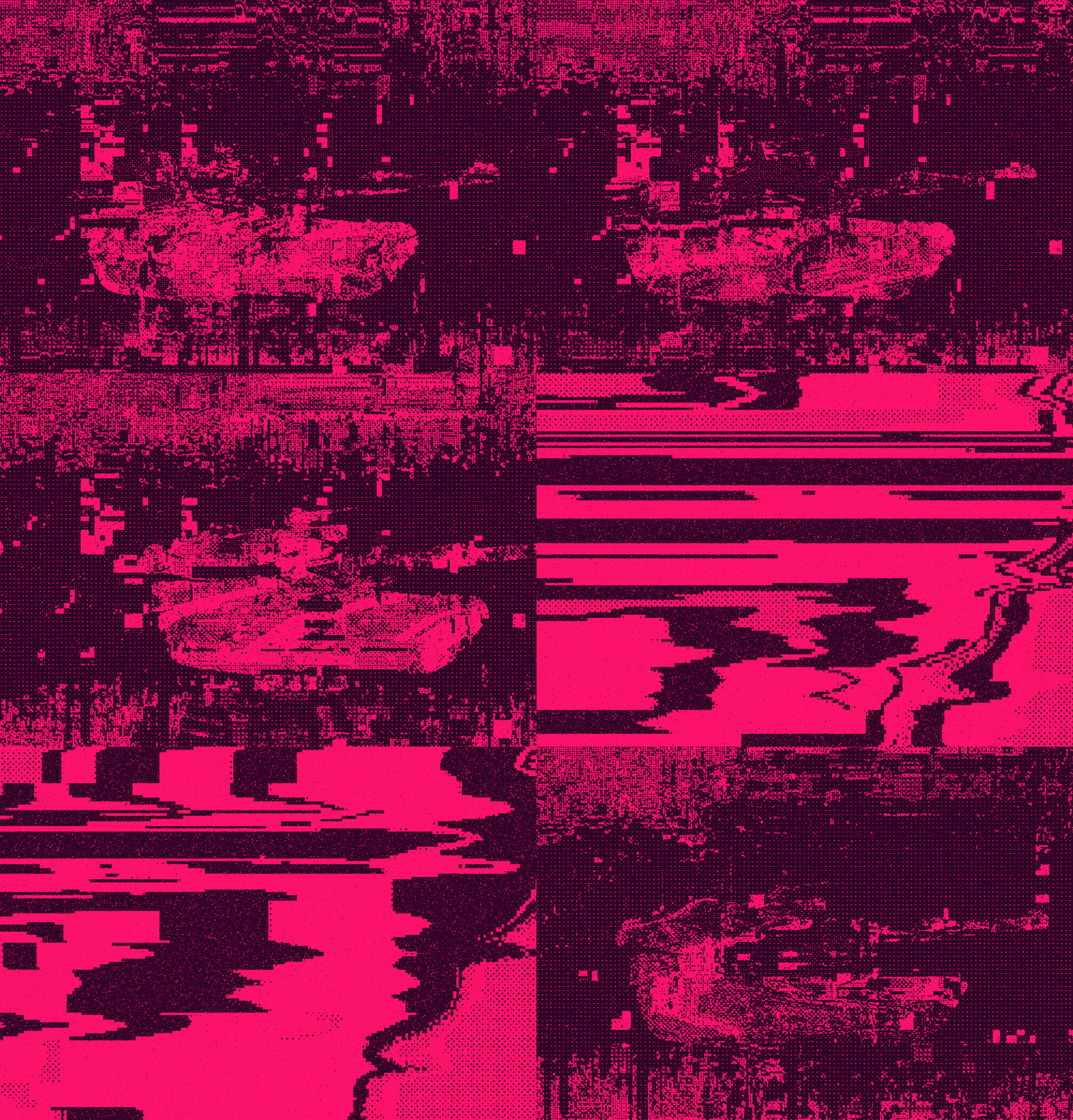
In XCOPY's world, provenance, the recorded history of ownership, is more than a record. It is a shield against the ephemerality of the internet. The blockchain is a transparent, tamper-proof ledger of every transfer, which makes ownership histories public and verifiable, and allows the work to be treated as a financial asset with a traceable past.
That same ledger is what makes preservation possible after the fact. When Ascribe collapsed, XCOPY performed a kind of provenance repair. He reminted The Departed on SuperRare and gifted it to its original collector, and he minted seven variations of Loading New Conflict on SuperRare, gifting them to the collectors who had supported his Ascribe work, with the first going to the collector Artnome. He declined to remint Jesus Mob, replacing it for its collector with one of the Loading New Conflict variations instead. In each case the technological rail had failed, but the relationship and the record were preserved.
This is why the platform matters less than the ledger. KnownOrigin was acquired by eBay in June 2022, and other early platforms simply vanished, but the record of ownership survives regardless of who runs the marketplace or whether it runs at all. XCOPY's KnownOrigin editions stand as a permanent record of the moment digital art found its footing, secured not by institutions but by code.
The foundation: Bitcoin and digital ownership
None of this was possible before there was a way to own a digital thing outright, and that begins with Bitcoin.
On 15 September 2008, Lehman Brothers filed for bankruptcy, the largest in United States history, with more than 600 billion dollars in assets affected. The collapse and the bailouts that followed became a defining case of privatising gains and socialising losses, with the public carrying the cost through taxes and, indirectly, through the inflation of a currency that could be printed without limit.
It was in that context that Satoshi Nakamoto published the Bitcoin whitepaper on 31 October 2008, proposing a system for electronic transactions that did not rely on trust. Bitcoin was the first working implementation of electronic cash, giving a digital token the essential properties of physical cash: it can be held directly, without a trusted third party, and sent to anyone, permissionlessly and peer to peer. The hard problem it solved was double spending, the risk of sending the same coin to two people at once, which it answered through a consensus mechanism that lets a distributed network agree on a single history even when some participants are dishonest. New transactions are gathered into blocks and secured by proof of work, in which validators expend real energy to add to the chain, making the record extremely expensive to alter after the fact.
Bitcoin added one more property that mattered for art: genuine scarcity. Its supply is capped at 21 million coins and cannot be inflated, which is why it is more often compared to gold than to fiat money. For the first time, a digital object could be genuinely owned, genuinely scarce and transferred without permission. That is the foundation the whole edifice of digital art ownership is built on, and as the rest of this book argues, the role technology plays in society, and a dystopian read on how it shapes us, are among the motifs that run through XCOPY's work.